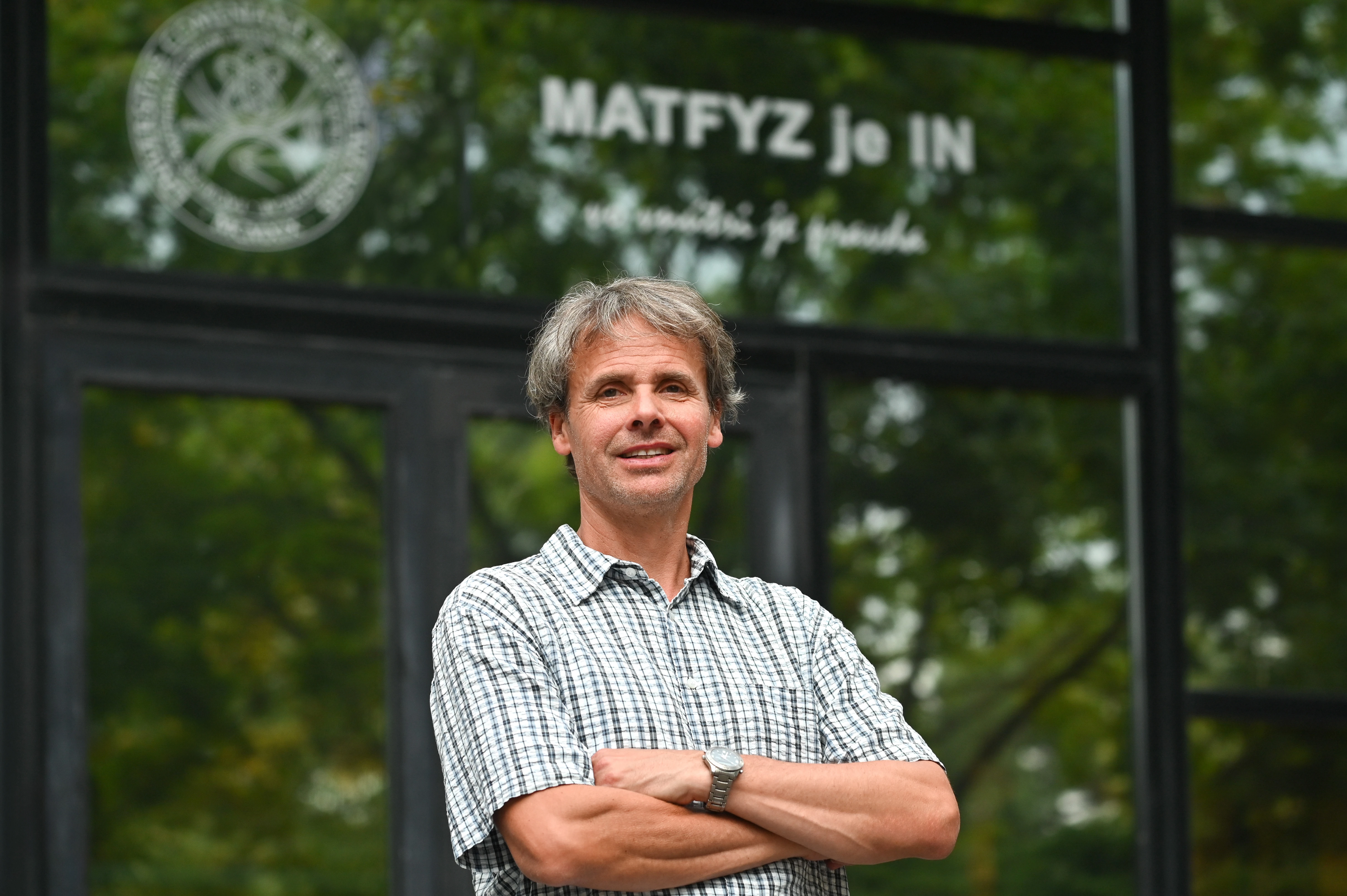
Electricity, air, and sometimes water. That is all Zdenko Machala needs to clean polluted water and air, heal wounds, or fight cancer.
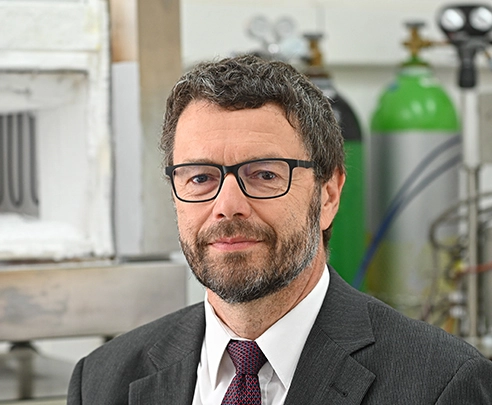
Zdenko Machala is a professor at the Faculty of Mathematics, Physics and Informatics at Comenius University Bratislava, where he leads a research group focusing on environmental and biomedical applications of cold, or low-temperature, plasma. This fourth state of matter – an electrically charged, highly reactive gas – can break down harmful substances, destroy microorganisms, or, conversely, stimulate human cells to heal more rapidly. While hot plasma occurs naturally in phenomena such as lightning, the plasma Machala works with is “cold” and can safely be applied even to living tissue.
His plasma research has a broad range of applications and is developing in several directions simultaneously. The first is environmental: cleaning polluted air and water, including infectious microorganisms and substances that conventional wastewater treatment plants are unable to remove, such as antibiotics, hormonal compounds, and so-called “forever chemicals” (PFAS).
In agriculture, he investigates how plasma can be used to embed nitrogen from the air directly into water, which can then be used as a fertiliser without the need to burn natural gas and release CO₂, as conventional industrial fertiliser production does.
In biomedicine, he studies how plasma can be used to disinfect wounds and accelerate their healing. The method has considerable potential for treating chronic wounds, which are particularly common among people with diabetes. He also investigates how and why plasma can selectively destroy cancer cells without causing significant damage to healthy ones.
It is in this latter area that Machala, together with an international collaborator, a professor of biology at the University of Freiburg, has come closer to understanding the mechanism by which plasma triggers programmed cell death, or apoptosis, in cancer cells. “It may not sound spectacular to the average person, but as a scientist, I find it extremely rewarding that we have gained a deeper understanding of the process,” Professor Machala says of the discovery, which he considers one of the important milestones of his career.
He heads the Department of Astronomy, Physics of the Earth, and Meteorology at the Faculty of Mathematics, Physics and Informatics and leads an interdisciplinary research group focused on environmental physics. He collaborates with colleagues from the Faculties of Medicine and Natural Sciences at Comenius University, as well as with companies and numerous international partners. He is currently involved in a project in collaboration with the European Space Agency and the Faculty of Mechanical Engineering at the Technical University of Košice. The project investigates indoor air purification and recycling, with potential applications for future human settlements on the Moon or Mars. He is also exploring whether plasma-treated water could help plants grow in infertile Martian soil.
Machala had been drawn to physics since secondary school, but it was only while studying at the Faculty of Mathematics and Physics at Comenius University that he discovered plasma physics, sparked by his interest in the potential of electrical discharges to purify air. A major step forward in his career came with a dual PhD from Université Paris-Sud in France and Comenius University in Bratislava, followed by a postdoctoral research fellowship at Stanford University in California. There, he experienced a highly competitive scientific environment, and it was there that he realised he wanted to put all his effort into science and research. After returning to Europe, he established his own research direction in a field that, at the time, was pursued by very few institutes worldwide.
Outside the laboratory, Machala is happiest in the mountains, skiing or ski touring – “as far away from civilisation as possible,” as he puts it. He also enjoys cycling and spending time outdoors, and when there is no time for a trip, he at least tends to his garden. He and his wife and children love to travel a lot and enjoy discovering the world together. Most recently, they travelled to Spain to witness a total solar eclipse.