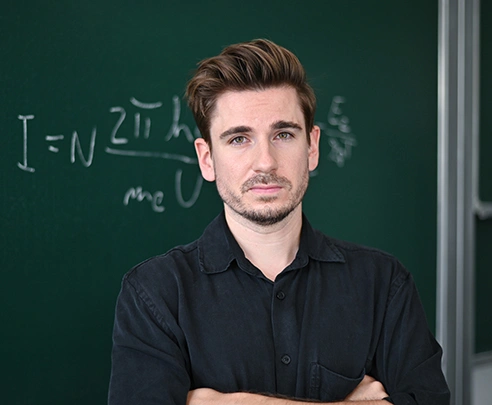
Conspiracy theories are among the most serious problems of the 21st century. They influence not only public debates but also interpersonal relationships and trust in institutions. Mgr. Jakub Šrol, PhD., a senior researcher at the Centre for Social and Psychological Sciences of the Slovak Academy of Sciences, investigates the psychological reasons why people believe in conspiracy theories, the consequences of these beliefs, and their impact on relationships and societal functioning.
He found his way to this topic gradually. During his undergraduate studies, he was fascinated by cognitive biases - systematic errors in thinking that cause people to misjudge probabilities or connect unrelated events. He explored this issue in his thesis and continued during his doctoral studies.
While studying cognitive biases, Šrol naturally progressed to researching conspiracy theories. "These mental distortions are one of the main reasons people trust conspiracy theories. For example, they more easily imagine that powerful groups can secretly operate and commit harmful acts for decades. Even though it's unlikely, our minds naturally seek patterns and simple explanations, so we're inclined to believe these stories," he explains.
One of his greatest achievements is identifying, together with his research team, specific factors that foster belief in unfounded claims - factors that can be targeted. Besides cognitive biases, unmet social needs play a role. Lonely or excluded individuals find a sense of belonging in online communities where such beliefs spread. Another factor is the feeling of helplessness and loss of control. This was especially evident during crises like the COVID-19 pandemic, when people were more likely to turn to conspiracy theories because they offered a sense of order in a chaotic world.
Šrol's research not only reveals the psychological mechanisms behind the spread of conspiracy theories but also helps us understand how these beliefs affect individuals, relationships, and society. He emphasizes the practical value of his work: "In a time when societies are saturated with disinformation and conspiracy theories, it's important to understand why people believe them and what consequences they have. This understanding allows us to design effective interventions and public policies to mitigate their negative social impacts."
He considers social polarization the most serious consequence of belief in conspiracy theories. It's not just about differing opinions, but about affective polarization - a state where groups (e.g., conservatives and liberals) begin to see each other as enemies and respond with negative emotions. This dynamic of hostility and distrust is dangerous because it undermines healthy societal functioning. The consequences can range from verbal abuse on social media to physical attacks.
In addition to conspiracy theory research, Šrol also studies climate change, analysing psychological reasons why society isn't more active in mitigating its effects. Although most people acknowledge its seriousness, they often don't act, sometimes because they feel powerless as individuals. Research he contributed to showed that when people saw the impact of even small behavioural changes, like reducing red meat consumption, their motivation to act increased.
He considers science communication an important part of his work, whether through media, books, or public discussions. "Science is publicly funded, so it's important that people understand what we do, in clear language, ideally in a way they can use themselves," he says. He sees this as one way to increase public trust in institutions, which is significantly weakened in Slovakia.
In the near future, he hopes to develop a project exploring how conspiracy beliefs affect interpersonal relationships. He already collaborates with Professor Karen Douglas from the University of Kent, a globally recognized expert on the topic. His goal is to secure an ERC grant and build an international team of experts at the Slovak Academy of Sciences.
For Jakub Šrol, science is the most reliable way to gain knowledge about the world. "Individual studies may have limitations, but when we look at research as a whole, it provides solid knowledge we can rely on," he believes.
His research on cognitive biases and unfounded beliefs has also helped him personally -he's become more tolerant, especially in discussions with people who hold different views. He understands the reasons behind differing opinions, which helps him avoid quick judgment. Although deeply immersed in science, he enjoys reading in his free time. Lately, he's been drawn to sci-fi and LGBTI+ literature. He and his colleagues founded a book and film club, and he also enjoys hiking.