The brief flashes in the sky that most people notice only as “shooting stars” are, for him, a source of valuable scientific data about the origin and evolution of the universe.
His research specializes in meteor spectroscopy – analysing the light produced when meteoroids burn up in the atmosphere. This allows him to determine their chemical composition, origin, and the diversity of materials in space. “Most meteoroids are made of common, expected materials, but occasionally we encounter something unusual, and that’s what pushes us forward,” he explains.
Among his most important findings is the systematic proof of hydrogen and cyanide in meteors – substances linked to water and organic compounds. This research contributes to the major question of where Earth’s water came from – whether it was delivered by asteroids, comets, or was present during the planet’s formation. “It’s still an open question. We’re trying to contribute small pieces to the puzzle,” he adds.
He is part of the team behind the global AMOS (All-sky Meteor Orbit System) network. Cameras are located not only in Slovakia but also in the Canary Islands, Hawaii, Chile, Australia, and South Africa. They record meteors and their spectra in high resolution and track their trajectories within the Solar System. He also combines this data with laboratory experiments, for example, working in a plasma wind tunnel in Stuttgart to test how meteoroids behave when burning in the atmosphere.
His research has both scientific and practical significance. It provides insights useful for locating meteorites and assessing risks associated with meteoroid impacts on Earth. It can also be applied to protecting satellites and space probes from damage caused by micro-particles.
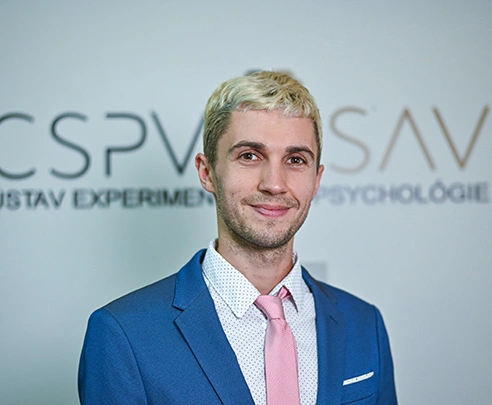
Matlovič is the author and co-author of over twenty scientific publications and leads projects supported by the European Space Agency and Slovak grant agencies. He is considered one of Slovakia’s most prominent young scientists, featured in Forbes’ 30 Under 30 and recognized by the Slovak Physical Society.
His interest in astronomy began in childhood, sparked by the night sky and books about space. “I didn’t see it as a realistic career choice, more as a hobby. But when I decided to study physics, I simply followed what fascinated me,” he recalls. That’s why he now encourages young scientists not to be discouraged: “When someone is passionate about something, they do the work better. Don’t let outside opinions deter you—science in Slovakia has room for new discoveries.”
Although most of his days are filled with data from observatories, he doesn’t see science as a job with fixed hours – it’s something that’s always with him. “Even in my free time, I catch myself thinking about what we saw in the sky or what the last experiment revealed,” he says. Still, he enjoys time away from science, playing hockey, traveling with his wife, or watching movies. One of his favourite rituals is a simple morning routine: sipping coffee while reviewing AMOS camera recordings to see what happened in the night sky around the world. “It’s the best part of the day – seeing what unfolded above us while we slept,” he says with a smile.