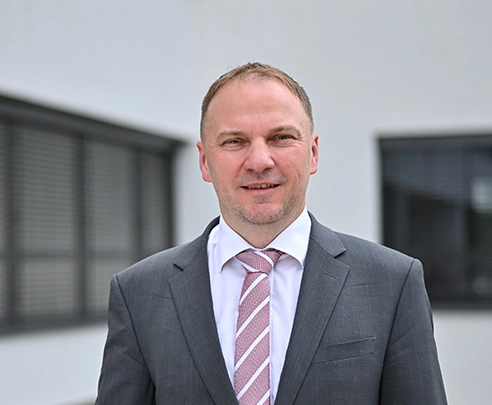
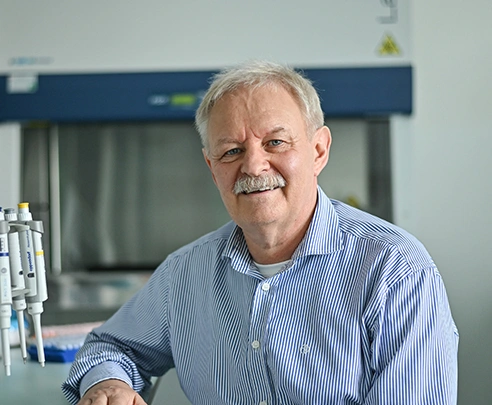
Dr. Adam Tomašových is among the scientists who can read the history of life from fossils and geological records. As a paleobiologist and evolutionary ecologist, he studies the development of marine ecosystems and seeks answers to how life copes with rapid environmental changes caused by both natural processes and human activities. "Fossils and the rocks in which they are found are a unique archive that allows us to track changes in biodiversity over past centuries, millennia, or even millions of years," he explains.
His research focuses particularly on how incomplete or partially distorted fossil records can be deciphered - so that we can ultimately understand how marine ecosystems have changed over geological periods and what these changes mean for today's world, which faces a climate crisis and increasing human pressure. Through fossil record analysis using modern paleontological and geological methods, he can uncover which processes led to ecosystem collapse and which, on the contrary, allowed them to survive and adapt.
He is interested, for example, in the extent to which today's phenomena - such as ocean acidification or rapid biodiversity loss - are comparable to events from the past. "When we see how ecosystems behaved during mass extinctions or major climate fluctuations, we can better understand how ecosystems might respond to ongoing and future climate changes," says Tomašových.
In addition to working with fossils, he uses mathematical models and statistical analyses that allow him to simulate ecosystem development and test hypotheses about their stability. His approach thus combines traditional methods with modern tools from biological and geological sciences. The results of his research show that natural systems often have greater resilience than we might expect, but they also highlight the limits of this resilience, which human activity dangerously pushes.
What makes his work exceptional is that it connects a view into the deep past with current questions of environmental monitoring and protection. Thanks to this, he demonstrates that paleobiology is not just a discipline concerned with long-extinct species, but one that provides insights that can help us better address today's challenges. "The past gives us the key to understanding the future," he emphasizes.
His research is conducted not only in Slovakia but also through broad international collaboration. The projects he participates in include expeditions to areas rich in fossil records and cooperation with experts from various countries. This international perspective is crucial for him - it enables comparisons across different environments and helps identify universal principles of nature's functioning.
Alongside his scientific work, he is also involved in public outreach, helping people understand what fossils can reveal. In his free time, he listens to music, reads books, or finds inspiration in nature and travel, which allow him to step away from scientific data and view the world from a different perspective.