He looks at images of tumour tissue that resemble the universe and teaches artificial intelligence how to read them.
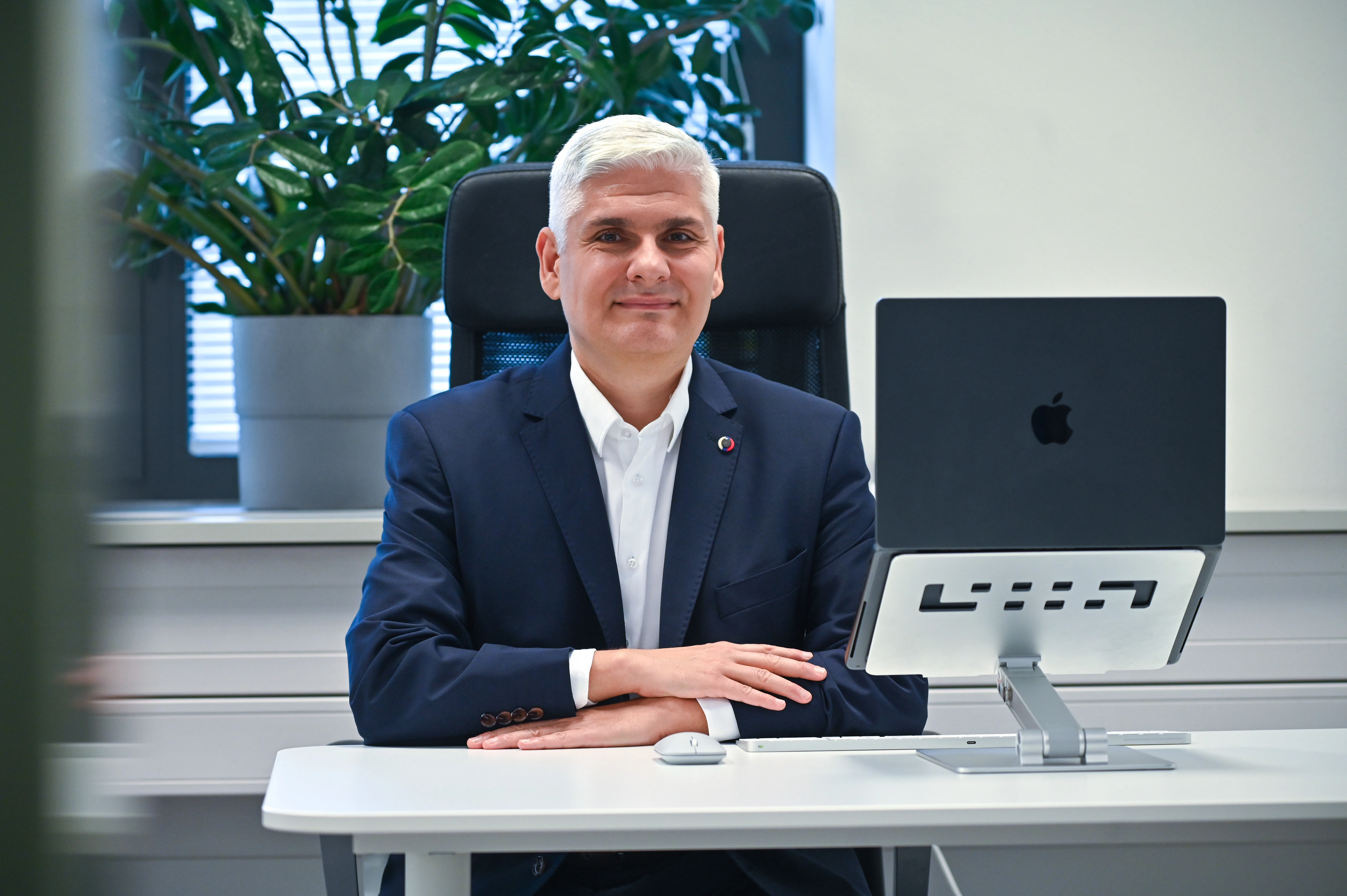
Pavol Čekan is the founder and CEO of MultiplexDX, a biotech company. His team developed Multiplex8+, a diagnostic test for breast cancer that combines three technologies: the imaging and quantification of RNA biomarkers directly in tissue, the identification and laser microdissection the most diagnostically relevant part of the tumour, and sequencing, which allows the team to analyse more than 20,000 biomarkers simultaneously.
The test can reveal the different types of cells that actually make up a tumour, remove healthy tissue from the sample, and generate molecular signatures indicating how a patient is likely to respond to a particular treatment.
The original idea emerged around 2009, when Čekan was a researcher at Rockefeller University in New York and worked with tissue from breast cancer patients for the first time. He discovered that his diagnostic results did not match the existing clinical reports. He founded MultiplexDX in 2016 and submitted ten applications for funding from the prestigious European EIC Accelerator scheme before his company finally succeeded at the end of 2019, becoming the first Slovak company in the history of the programme to receive the grant. Development continued during the pandemic, when the company became widely known in Slovakia for developing certified PCR tests for COVID-19.
This year, his team completed an international retrospective validation study involving 590 patients with triple-negative breast cancer, the most aggressive subtype of the disease, and is launching the SMART DX prospective clinical study across nine countries. The project involves dozens of academic and clinical institutions, ranging from the East Slovak Institute of Oncology and Oslo Cancer Cluster to Hospital del Mar in Barcelona.
A project particularly close to Čekan’s heart combines AI with RNA FISH – RNA Fluorescence In Situ Hybridisation. RNA FISH makes it possible to label specific RNA molecules in thin tissue sections. AI then detects, counts, and analyses the coloured dots visible under a microscope. This reveals how active a particular gene is within a cell. According to Čekan, it is an exceptionally sophisticated technology that, at this level of precision, signal intensity, and automation, does not exist anywhere else in the world.
He says the technology itself is already complete. The challenge now is to bring it into clinical practice worldwide. To achieve this, he is building his own centralised, certified clinical laboratory capable of processing samples from virtually anywhere. The goal is to make diagnostics faster, more accurate, and, above all, more accessible, including in lower-income countries.
Čekan’s interest in chemistry began in primary school, where he excelled in chemistry competitions, although at university he also seriously considered pursuing a career as an opera singer. He spent years preparing to represent Slovakia at the International Chemistry Olympiad but failed to qualify in the final national round. Čekan says that this setback became a powerful source of motivation and taught him always to see things through to the end – from earning his PhD in nucleic acid chemistry in Iceland and finding the courage to move to the United States for work to eventually founding his own company.
For many years, he was involved in folk music, playing the violin, and singing. Today, he most enjoys spending time with his wife and three sons, as well as playing floorball with his friends. His favourite way to unwind is simply to go for a walk – whether in the mountains, through a forest, or along quiet city streets.