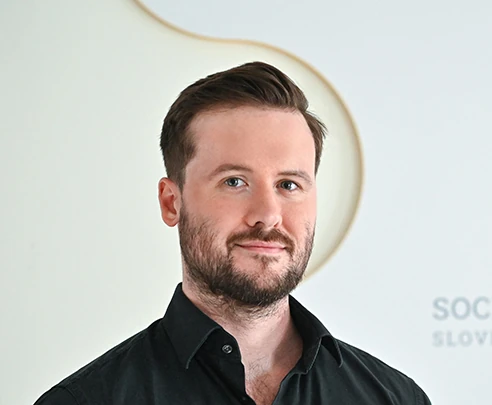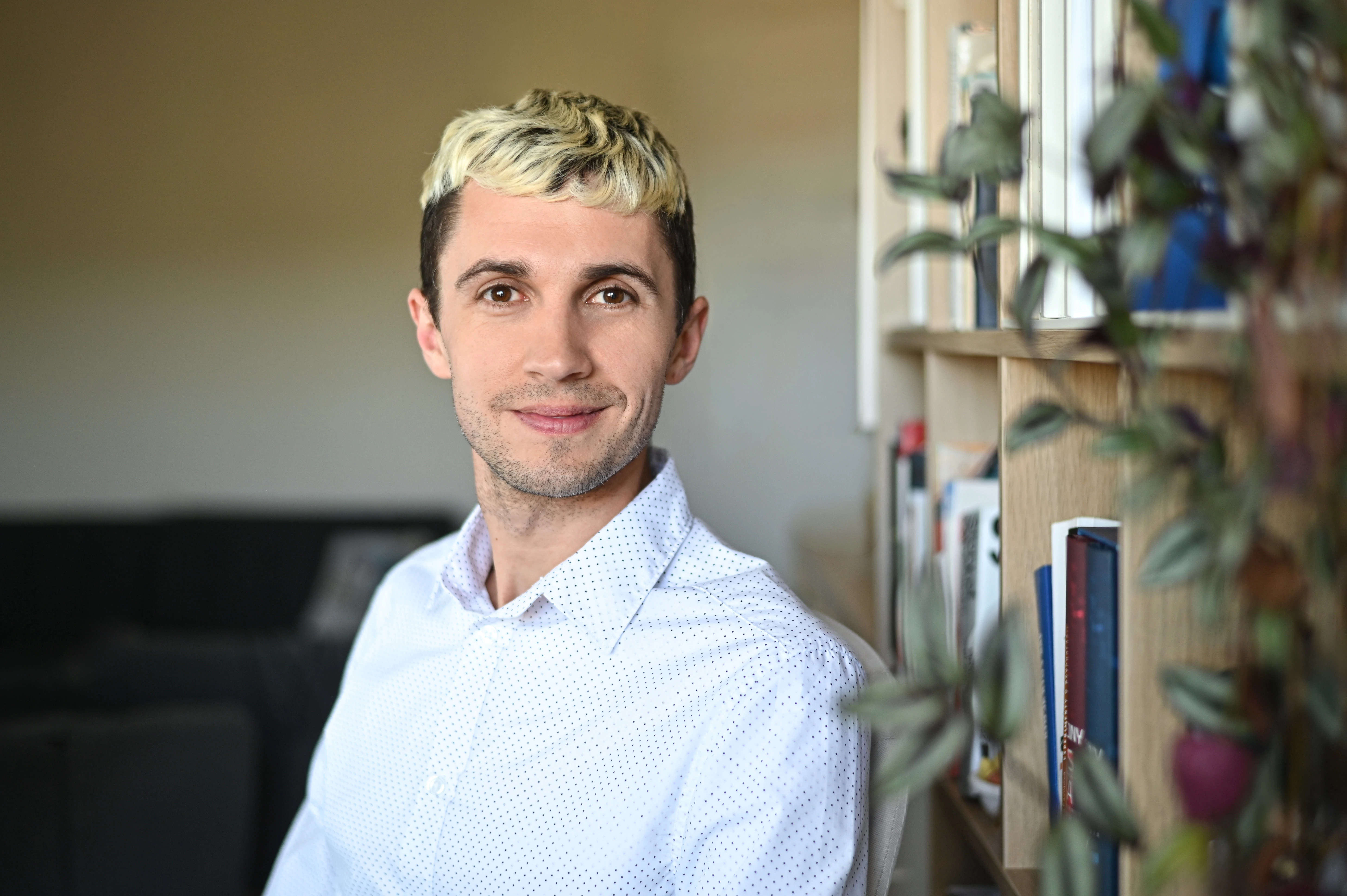
Why do people believe stories that have no basis in reality? And how do these beliefs shape our closest relationships or trust in society as a whole? Over years, these questions have been the focus of Jakub Šrol, PhD, a senior researcher at the Centre of Social and Psychological Sciences of the Slovak Academy of Sciences. He believes conspiracy theories to be among the most serious challenges of the 21st century because of their profound impact on public debate and mutual understanding. In the summer of 2026, his academic career took on a new international dimension: he started working as a postdoctoral researcher at the University of Kent in Canterbury, UK. His new project focuses on an area that has so far received very little attention in conspiracy theory research – how conspiracy beliefs affect the quality of romantic relationships.
“In our research, we want to look not only at the negative consequences that belief in conspiracy theories can have for relationships, but also at the other side of the equation – whether a shared belief in certain theories might actually bring two people closer together, strengthen mutual trust, and perhaps even have some positive effects on their relationship,” the psychologist explains.
Jakub Šrol came to the study of conspiracy theories gradually through research into cognitive biases – systematic errors and distortions in thinking that lead our minds to seek patterns and simple explanations even where none exist. Over time, however, both his own perspective and the direction of research worldwide have shifted considerably. Evidence increasingly suggests that cognitive factors such as intelligence, education, or critical thinking are not the primary reasons why someone comes to believe unsupported claims.
Although critical thinking can offer some protection, we are all, to some extent, susceptible to conspiracy thinking. Social factors play a crucial role, particularly our group identity and our desire to belong. “Our identity and the community we belong to often determine which specific conspiracy beliefs we are likely to adopt. We can see this clearly in the different theories believed by conservatives, liberals, or members of social minorities, for example,” Šrol explains.
He also notes significant shifts in the study of how people perceive the prevalence of conspiracy beliefs among those around them. The research he has contributed to reveals an interesting paradox. While, for example, 10 to 20 percent of respondents in Slovakia may endorse a particular conspiracy theory, those same respondents estimate that as many as 30 or 40 percent of other people believe the same claim. “People tend to substantially overestimate the extent to which other people believe conspiracy theories. This is probably partly caused by the extent of the subject’s presence in the media and in academic circles. But it is crucial not to overstate these negative influences and to recognise that conspiracy theories are almost always beliefs held by a minority of the population, rather than by the majority of society,” Jakub Šrol explains.
In his research in Slovakia, he also focuses on conspiracy beliefs concerning social minorities, particularly the LGBTI+ community. “Our research often shows that conspiracy beliefs are associated with a sense that the LGBTI+ minority poses a threat to people’s identity, which in turn leads to a reluctance to come into contact with LGBTI+ people. I would like to see our research move towards practical applications. We want to find ways of addressing these beliefs that could help us reduce prejudice, help people identify common ground, and improve both interpersonal and intergroup relations,” Šrol says.
One of his main goals for the coming years is to apply for a prestigious ERC grant and build an international team of leading experts. He believes that rigorous research can bring greater reason to public debate and help society move away from labelling people as “conspiracy theorists” simply because we disagree with them. He considers teamwork fundamental to quality science efforts. He most values strong relationships in the workplace, open feedback, and genuine support among colleagues.
He also considers informing the public about science to be the responsibility of scientists besides research itself. “Science is funded from public money, so it is extremely important that the results of our research reach people in accessible language and can be put into practice,” he emphasises. In his free time, he enjoys reading fiction, particularly science fiction, fantasy, and LGBTI+ literature. He also enjoys good films and unwinds by hiking in national parks.