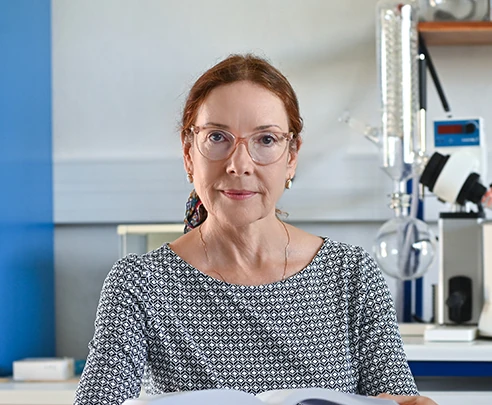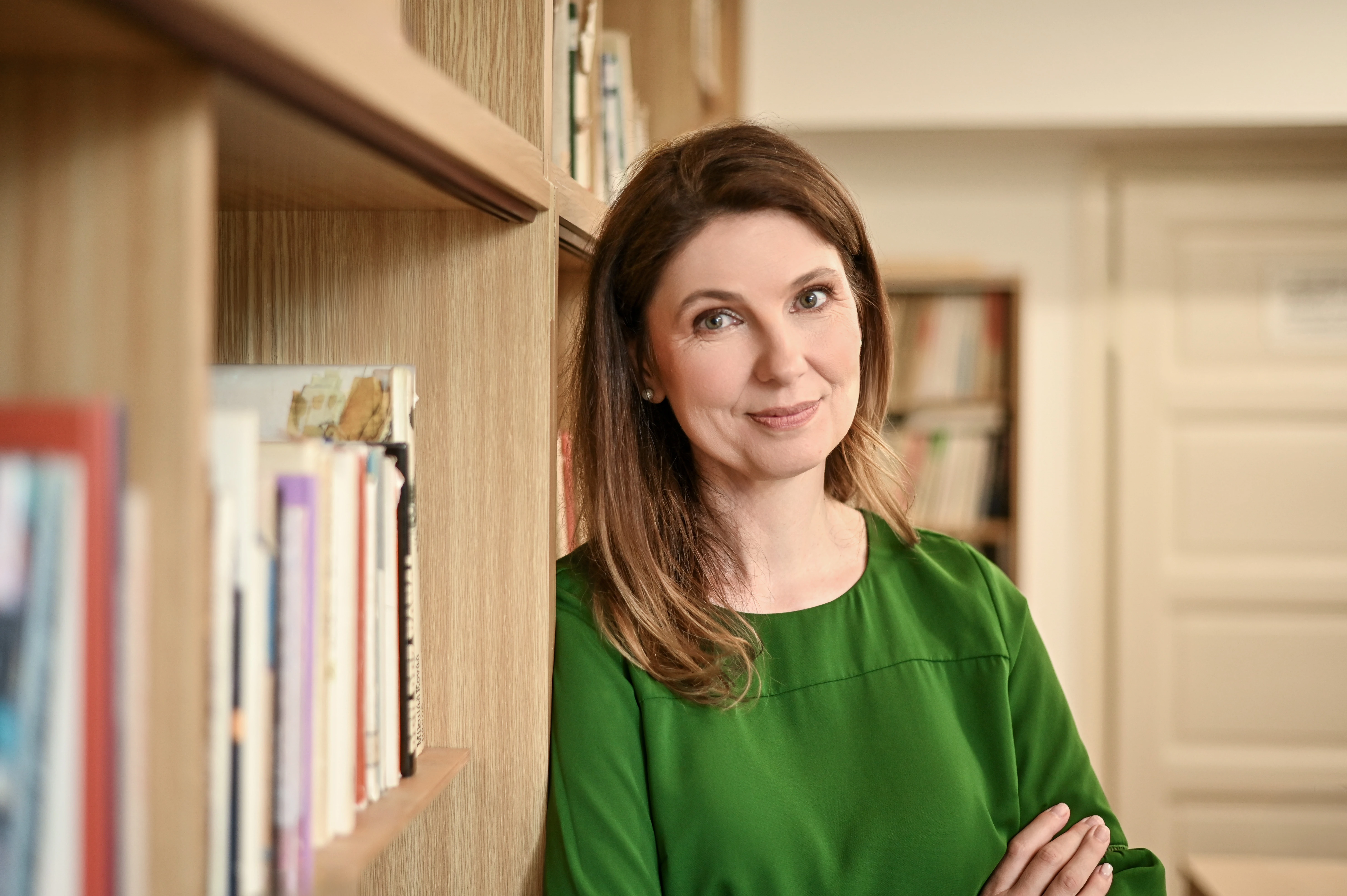
Doc. Mgr. Svetlana Kapalková, PhD, heads the Department of Communication Disorders at the Faculty of Education of Comenius University Bratislava. Her research, teaching, and clinical work focus on child language development, early identification of language difficulties, non-verbal communication, and bilingualism. She is one of the leading figures in contemporary speech-language pathology, and her work has influenced the assessment and therapy of several generations of children.
She studied primary teaching and logopedics for schools at the same time. As a doctoral student, she became “completely absorbed” in child language development. She was fascinated by how, without formal instruction, a child becomes a capable communication partner within just a few years. “In a child’s spontaneous speech, we can hear them thinking aloud – in the words they choose, the way they put them together into sentences, and the way they tell stories,” she explains.
When she began, knowledge about language development came mainly from English-speaking children, and systematic Slovak data were virtually non-existent. For her PhD, she spent almost four years recording children in their home environments and then analysed their speech. “It was a very exciting time. We suddenly began to realise that many things did not work at all as they did for English-speaking children.” Several milestones and measurements developed for English did not fit the morphologically rich Slovak language. Working with Daniela Slančová, she developed a grammatical profile of Slovak children and, with other linguists, a measurement of mean length of utterance that is used in both clinical practice and research. Her daughter Nina was one of the five children whose speech formed the basis of the first developmental model for Slovak-speaking children. Nina’s recordings were assessed by Kapalková’s colleagues so that the results would be assessed without any parental biases.
The data led to a standardised parent questionnaire for identifying the risk of language difficulties at an early age. Its norms were based on data from approximately 1,700 children, and its shortened version, the test of communicative behaviour (TEKOS), became part of the standards used in paediatric and speech-language pathology practice. Kapalková and her team were thus the first in Slovakia to standardise the objective assessment of child language development against norms, rather than relying solely on clinical judgement. Slovak data on children’s vocabulary are also included in Wordbank, an open database at Stanford University. The co-authored monograph Raná logopedická intervencia (Early Speech and Language Intervention) describes direct assessment and therapy for young children using spontaneous speech.
With Kamila Polišenská, she also developed a playful way to administer a pseudoword repetition test. Children repeat invented words with no meaning while playfully threading beads onto a string. This method is used by research teams even abroad. Repeating pseudowords can help distinguish whether a bilingual child has a communication disorder or has simply had less exposure to the language being assessed. Her team is also working on ways to assess vocabulary and the non-verbal abilities that underpin communication.
When her son started the first year of primary school, her interest in reading literacy grew stronger. She was struck by how little spelling books made use of what is known about the importance of spoken language for reading comprehension. With Lýdia Vencelová, she created a new spelling book focused on language and communication. Their team tested its effectiveness over three years in a randomised, partially blinded study. “It is not enough to think subjectively that something might work. You have to test it scientifically,” she stresses. “All innovations in society should be introduced only after rigorous research has shown that they work, and that applies to textbooks too.” The Ministry of Education initially did not approve the spelling book for use in schools, though it later granted it a recommendation. Despite this, the innovative book has not taken hold in Slovak schools to the extent she had hoped. According to Kapalková, it is now used by private schools, some state and church schools, and several Slovak education centres abroad.
She has also drawn on her knowledge of children’s speech to write books for the youngest readers. She had felt that books for this age group lacked contemporary subjects written in the language of young children. She encourages parents to read with their children. “Simply reading to children is not enough. We need to talk to them about the story, explain unfamiliar words, and ask about what is between the lines.”
She also connects research with practice at Inštitút detskej reči, the child language institute she co-founded more than twenty years ago. Its multidisciplinary team assesses and provides therapy for children with communication difficulties with a strong emphasis on working with parents as well as children. “We support families for several years, and children we once worked with are now returning to the institute with children of their own.”
The department she heads is the only institution in Slovakia that provides university-level education for speech-language therapists, including doctoral studies. With her students, she developed an online assessment of storytelling that is also used by research teams abroad. Her latest project is the University Speech and Language Therapy Centre, the first of its kind in Central Europe. “That is what I am most proud of,” she admits. The centre is intended to provide free care to children and adults, while giving students opportunities to observe assessments and therapy and take part under expert supervision. In her view, training more future speech-language therapists must not mean lowering the quality of their education.
She herself does not want to be the centre of attention. “I am more the kind of person who creates the conditions for others from behind the scenes.” She sees bringing people together and building research teams as her strengths. She is also an avid reader. Years ago, while transcribing her daughter Nina’s speech, she came across Elena Maróthy-Šoltésová’s book Moje deti (My Children). In the author’s observations of her own children, she recognised a parallel with her work a century later. The technology and methods have changed, but Associate Professor Kapalková remains fascinated by the seemingly miraculous way human language emerges from children’s first gestures and words.